Do you need a burn permit in Tennessee?
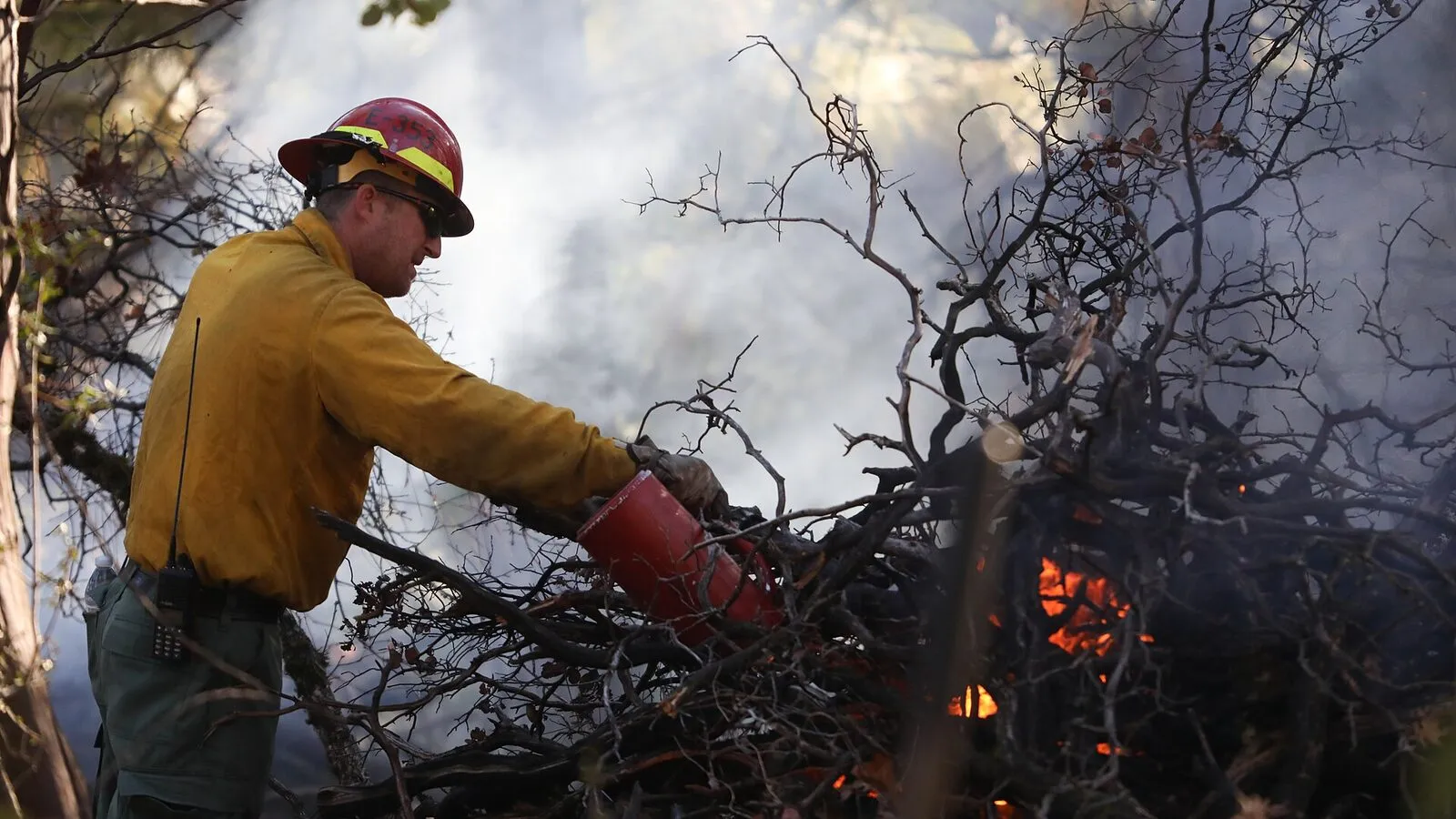
Yes, from October 15 to May 15, for leaf piles, branches and other debris piles you burn in the open. The Tennessee Division of Forestry permit is free, and you get it online or by phone. Each permit is good for one day. Local rules can be stricter, and some places allow no outdoor burning at all.
The state’s permit season opened October 15. A burn restriction or a burn ban can stop debris burning when fire danger climbs. Check again on the day you burn.
This guide sums up what the state agencies publish, and it is not legal advice. Check with your county and city before you burn. Three Crosses Land Services does not burn brush piles for customers. We do not get or file burn permits for anyone either.
We grind standing brush where it grows with the drum mulcher on our mini skid steer. A pile that is already stacked goes on the dump trailer with our yard waste removal service.
Which burn permits and rules apply in Tennessee?
The state permit covers debris burning from October 15 to May 15, and state laws add rules around it. Local rules override the state’s. The table sums up the permits and rules that apply to a Tennessee landowner.
| Permit or rule | When it applies | Cost | Who issues it |
|---|---|---|---|
| State burn permit | October 15 to May 15, for leaf piles, woody debris like branches, hurricane storm debris and prescribed fires | Free | Tennessee Division of Forestry |
| The 500 foot law (TCA 39-14-306) | An open air fire within 500 feet of forest, grassland or woodland, October 15 to May 15 | Free permit; a Class C misdemeanor without one | State law; the permit comes from the state forester |
| Burn restriction | When wildfire risk is elevated; permits pause until it lifts | None; no permits are issued | Tennessee Division of Forestry |
| Burn ban | Severe fire weather, in named counties or across a region or the state | None; breaking a ban is a Class A misdemeanor | Commissioner of Agriculture with the State Forester, or the Governor |
| Wood waste near an occupied building (TCA 68-201-115) | Burning within 200 feet of an occupied building, by anyone other than an occupant | None; four conditions apply | State law, published by the Tennessee Department of Environment and Conservation (TDEC) |
| What may and may not burn | All year, statewide | Improper burning can bring fines up to $25,000 | TDEC |
| Local permit in Hamilton County | October 1 to April 30, in Hamilton County and its cities | $15 for the county permit | Chattanooga-Hamilton County Air Pollution Control Bureau |
| Other local rules | Cleveland and Davidson County allow no outdoor burning | Set locally | Your city or county |
The Division of Forestry says its permit is required for debris pile fires from October 15 through May 15. State law backs that up for any open air fire within 500 feet of forest, grassland or woodland.
How do you get a burn permit in Tennessee?
Online or by phone, on the day you plan to burn. The online permit system runs 7 days a week, 8 a.m. to 11 p.m. Those hours follow Eastern or Central time, depending on where you are. Start at BurnSafeTN.org.
By phone, call 877-350-BURN (2876) Monday through Friday, 8 a.m. to 4:30 p.m. Central, except holidays. Call volume runs high at times, with long waits. The Division of Forestry encourages every applicant to apply online.
A permit is good for one day, so get it on the day you burn. Have the fire completely out by midnight that day. Burning again tomorrow takes a new permit for that day.
Permits are issued only when it is safe to burn. The Division of Forestry says permits generally are not issued on dry, windy days. Even with a permit in hand, stop burning if a strong wind comes up.
Escaped debris burns are the leading cause of wildfires in the US and in Tennessee. Before you light the pile, work down this list:
- Check your city and county rules, since local rules override the state permit.
- Get that day’s permit online or by phone.
- Burning wooded land? Tell adjacent landowners at least 2 days ahead. State law requires the notice.
- Rake a firebreak down to bare ground. Make it at least 3 feet wide through leaves or short grass. Through tall grass or brush, make it at least 5 feet wide.
- Pick a spot away from overhanging branches and from overhead and underground utility lines.
- Keep water and tools close by.
- Stay with the fire until it is completely out and cooled. The Division of Forestry calls that the law.
What needs a permit, and what does not?
Open debris fires do, during the permit season. The Division of Forestry lists four kinds of fires that need its permit. They are leaf piles, woody debris like branches, hurricane storm debris and prescribed fires.
Some fires need no state permit. A fire in a container or barrel with a 1/2 inch mesh screen cover is one. Ceremonial fires and grilling need none either.
In summer, the Division of Forestry requires no permit at all. Local rules still apply all year, and some counties and cities set their own permit rules. A summer brush pile can still need a local permit, or be off limits.
What is the difference between a burn restriction and a burn ban?
A burn restriction pauses permits, and a burn ban stops open-air burning. When wildfire risk climbs, the Division of Forestry stops issuing permits for a while. No one may do a burn that needs a permit until the restriction lifts. A restriction does not cover campfires, outdoor grilling or burn barrels with mesh covers.
A burn ban is a bigger step. The Commissioner of Agriculture, with the State Forester, can ban burning in specific counties when county mayors ask. The Governor can issue a regional or statewide ban. Under state law, a county cannot issue a burn ban on its own.
A ban covers leaves and brush, campfires, burn barrels and charcoal or wood fired grills. Natural gas and propane grills are left off the list. Breaking a ban counts as reckless burning, a Class A misdemeanor. That can bring a fine, up to 11 months 29 days in jail, or both.
To see if a ban is in place, check the Division of Forestry’s burn bans page on tn.gov. Media and local governments sometimes use these words differently, so ask when a notice is unclear.
What can you burn in Tennessee, and what is never allowed?
Natural yard waste and clean wood, where local rules allow it. TDEC, the state environment department, says it may be okay to burn leaves, branches, limbs, twigs and lawn clippings. Woody vegetation, yard trimmings and clean, unpainted, uncoated wood or untreated lumber are on that list too. Check local ordinances as well.
TDEC’s list of what not to burn in Tennessee includes these:
- Tires and other rubber products
- Vinyl siding, plastics and other synthetic materials
- Paper products, cardboard and newspaper
- Asphalt shingles, other asphalt roofing and demolition debris
- Asbestos-containing materials, paints and household or farm chemicals
- Aerosol cans, food cans and coated wire
- Building materials, construction debris, buildings and mobile homes
- Household trash
- Most vegetation not grown on site
The last line matters for brush. Most brush grown somewhere else cannot go on your pile. Improper outdoor burning can bring fines up to $25,000. To report illegal burning, call TDEC at 1-888-891-TDEC (8332).
How close to a house can you burn?
State law sets conditions within 200 feet of an occupied building. Under TCA 68-201-115(c), they apply when the person burning wood waste is not an occupant of that building. That can mean a hired crew, or the owner of the lot next door.
In that zone, the burn has to meet these four conditions:
- At least one person stays at the fire for the entire burn.
- Each burn lasts 48 hours at most.
- Burning happens no more than twice in any 30-day period.
- Within 100 feet, an adult occupant must give written authorization, and must not have taken it back in writing.
An occupant burning near their own home is outside these four conditions. The state permit rules apply either way.
What happens if you burn without a permit in Tennessee?
It can be a crime, and you can owe money on top. In season, burning within 500 feet of woods or grass without a permit is a Class C misdemeanor. That rule is TCA 39-14-306.
Other state laws add charges of their own:
- Leaving a fire unattended and not fully out within 150 feet of forest or woodlands is a Class B misdemeanor.
- Setting fire to woods without giving adjacent landowners at least two days’ notice is also a Class B misdemeanor.
- Burning during a burn ban counts as reckless burning, a Class A misdemeanor.
The state’s wildfire law page lists the limits. A Class C misdemeanor carries up to 30 days, and a Class B up to 6 months. A Class A carries up to 11 months 29 days. A fine can come with the jail time or in place of it.
Money is on the line too. TDEC says improper outdoor burning can bring fines up to $25,000. Anyone who sets a fire negligently or willfully owes the Division of Forestry its cost to put it out. You can also be liable for damage your fire and smoke cause to other people’s property.
Do local rules override the state burn permit?
Yes. The Division of Forestry says local restrictions supersede state rules. It keeps a county and municipality list of places with stricter rules. If your city or county is on it, the state says to contact your local government.
Some places on the list allow no outdoor burning at all. Cleveland, in Bradley County, is one, and Davidson County is another.
For the counties around Chattanooga, the list reads like this:
- Hamilton County: every listed city, Chattanooga included, points to the Air Pollution Control Bureau.
- Bradley County: Cleveland is the only entry, with no outdoor burning allowed.
- Marion County: South Pittsburg is the only entry, with local contact numbers.
- Rhea, Sequatchie, Meigs and Bledsoe counties: no entries.
Where the list is silent, the state permit is the rule unless a city or county says otherwise. That includes Dayton in Rhea County and Dunlap in Sequatchie County. A call to the city or county office before you burn settles it.
What if you live in Chattanooga or elsewhere in Hamilton County?
The Chattanooga-Hamilton County Air Pollution Control Bureau issues burn permits there, on its own season. Hamilton County is one of four places in Tennessee with its own air pollution program. The other three are the areas around Knoxville, Nashville and Memphis. TDEC enforces the state’s air rules in the remaining 91 counties.
Seasonal burning in Hamilton County is allowed with a valid permit from October 1 to April 30. The bureau’s county burn permit costs $15, and permits inside some city limits work differently. Our Hamilton County burn permit guide covers which one you need and when the state permit applies too.
What can you do with brush instead of burning it?
Grind it where it stands, or haul it off. Both work in any month of the year, and neither takes a burn permit.
Our drum mulcher rides on the mini skid steer and grinds standing brush and small trees into chips. The chips stay spread across the ground where the brush stood. The machine fits through a standard fence gate, which puts backyard brush in reach.
Mulching is how our land clearing work opens up an overgrown lot. Open fields that only need cutting back get brush clearing and bush hogging with the rotary cutter. Clearing ground can take a permit of its own, and our land clearing permit guide covers when in Hamilton County.
A pile that is already stacked goes on the dump trailer and leaves the property. Brush piles, cut limbs and leftover clearing piles all ride out that way. Long limbs get cut to fit on the spot.
Skipping the burn pile
In season, burning takes a permit on the day and someone at the fire until it is out. Mulching or hauling skips the burn, and it can happen in summer too. The estimate is free, and it starts with a look at the brush and how a trailer gets to it.
Send the address and a photo or two of the pile or the overgrowth. Mention anything mixed in, like old lumber or trash, since that changes the plan.
Three Crosses Land Services is a veteran-owned family business based just north of Chattanooga, TN. We are licensed and insured, and we cover Chattanooga, Southeast Tennessee, and Northwest Georgia. To get a brush pile hauled away, call or text (423) 260-5675.